
Most travellers hurry through the Podhale plain on the way to Zakopane and never notice that they have passed the oldest Catholic parish in the highland country. Ludźmierz does not look like a capital. It is one all the same.
In 1234 a wooden church was raised here in honour of the Mother of God, and Cistercian monks were brought to drain the wet ground. They later moved their monastery to safer land, but they did not leave the parish. Around 1400 a lime-wood figure of Mary arrived — according to the old story, as thanksgiving from a Hungarian merchant who had been led out of the peat bogs. For centuries she stood in a side altar. The prettier statue held the high altar. The people prayed to the side one, and in 1776 the Church moved her to the place of honour.
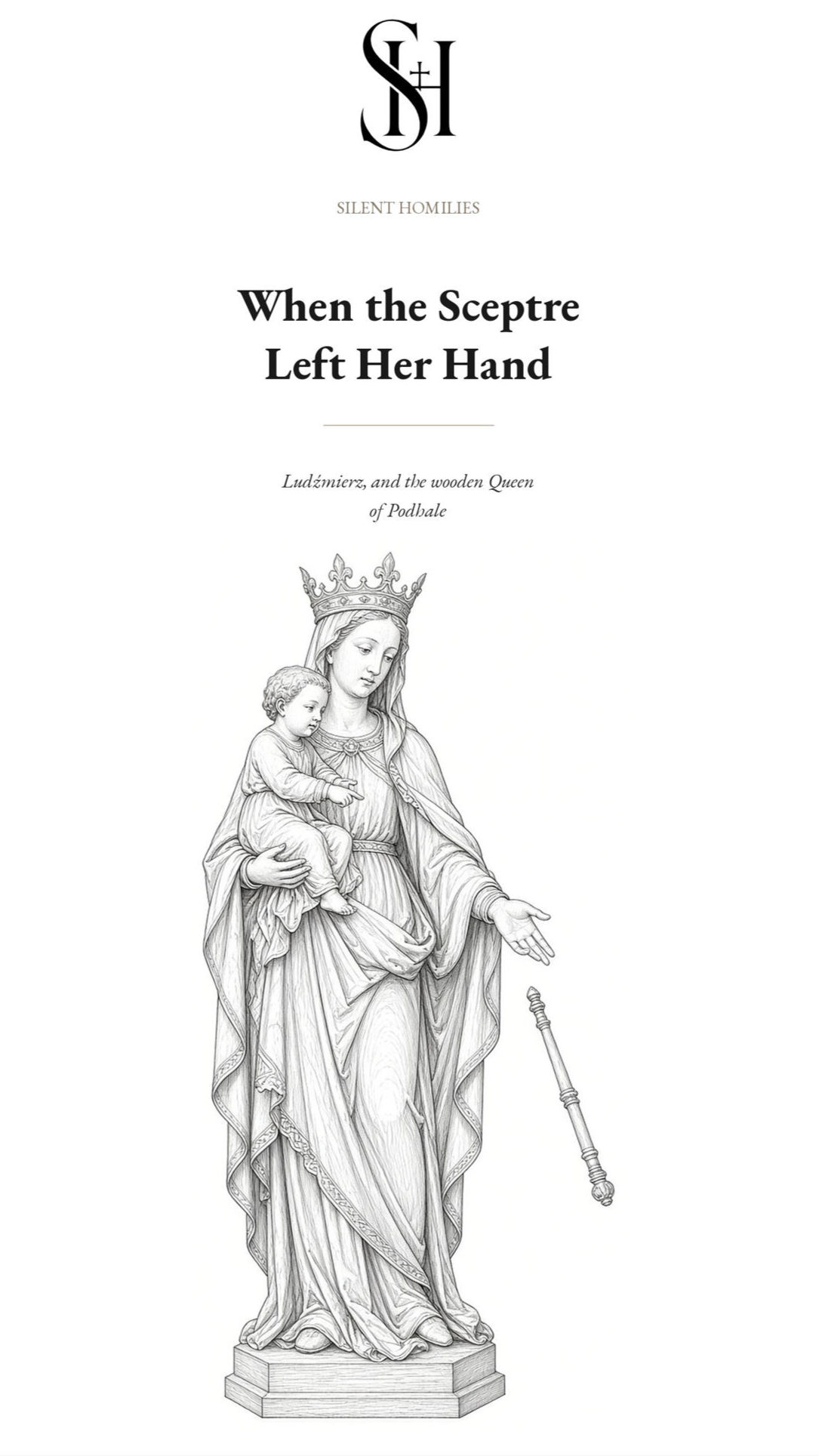
On 15 August 1963 Cardinal Wyszyński crowned her with papal crowns. As four bishops carried the newly crowned figure, the sceptre slipped from her hand. Bishop Karol Wojtyła caught it in the air. The Primate said that the Mother of God was handing him power. Fifteen years later the same man was Pope. He called her a real highland gaździna — the woman who keeps the house — and in 1997 he came back to pray the rosary on the meadow behind her church.
This little book tells that long faithfulness in ordinary words. It is not a guidebook and not an argument about every legend. It is the story of a wooden mother who was not the prettiest statue in the building, a sceptre that did not hit the ground, and a people who still ask her to keep their home.
A Silent Homilies booklet. Written to be read in one or two sittings.