
Most of us meet purgatory already painted. Flames. Screaming. A picture that looks like hell with a slightly shorter sentence. Then someone says the whole idea was invented to sell indulgences, and the Church’s actual teaching sits between those two insults, unheard.
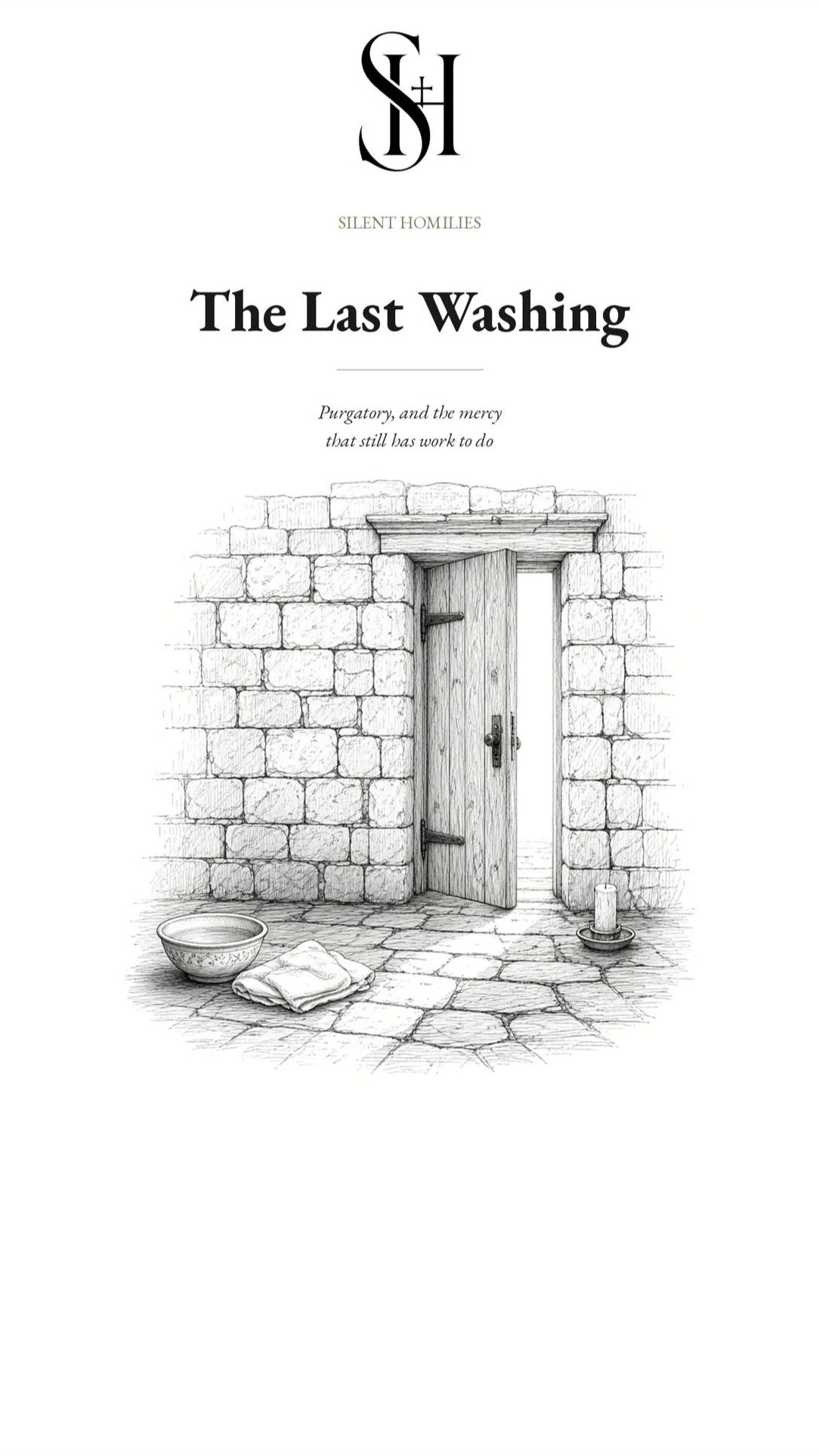
The Catechism is quieter. All who die in God’s grace and friendship, but still imperfectly purified, are assured of their eternal salvation. After death they undergo purification, so as to achieve the holiness necessary to enter the joy of heaven. Saved people. Not damned people having a rehearsal. A last washing, so that nothing untrue is carried through the door.
This little book is not a map of the next world, and it is not a threat. It walks through a collection taken for dead soldiers two centuries before Christ, a mother at Ostia who asked her son only to remember her at the altar, two councils that said just enough, a woman in Genoa who would not let the fire be hatred, a November morning after All Saints, and a pope who called the encounter with Christ the flame that burns and saves.
Read it if the holy cards have made you shy of the doctrine. Read it if you already pray for the dead and have never been told how little the Church claims to know about the furniture of that mercy. Heaven is not a club that waves imperfect people through. Hell is not a waiting room. Between those two refusals there is a kindness that still has work to do.
A Silent Homilies booklet. Written to be read in one or two sittings.