
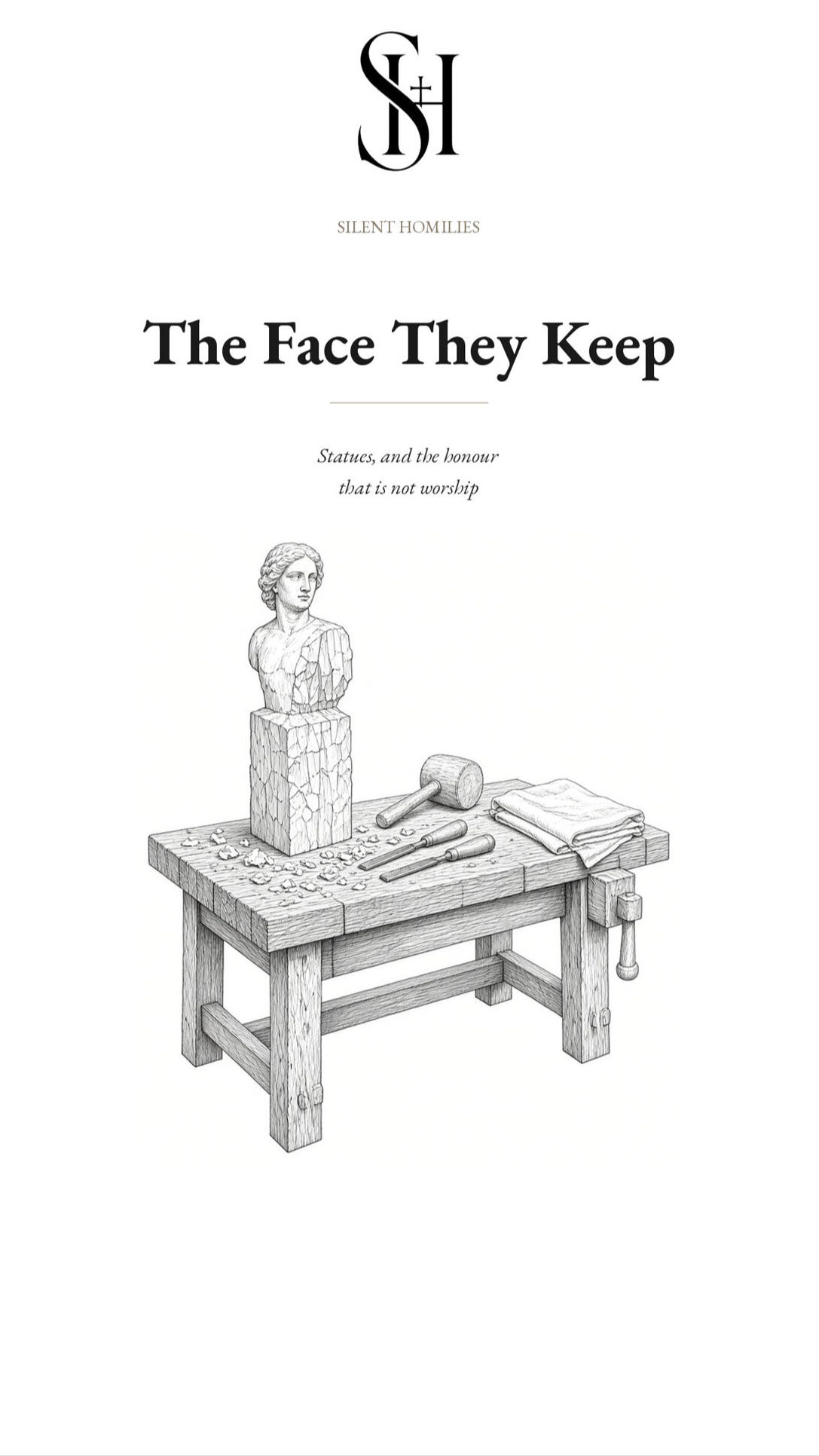
Most of us meet a church statue already accused. Someone has called it an idol. Someone else has treated it as a charm. Between those two mistakes the Church’s actual teaching sits quietly, and a great many Catholics could not say it in a sentence if they were asked at the door.
The sentence is older than most of the plaster. The honour given to an image passes through to the one it shows. The wood is not worshipped. The person is honoured. God alone is adored. That distinction was written into an ecumenical council in 787, after a century of emperors who thought holiness meant empty walls.
This little book is not a defence of bad taste, and it is not a catalogue of famous shrines. It walks through a monk who would not despise matter, a council that compared a statue to the Gospel book, the West’s habit of standing the saints up in the same air we breathe, the English niches that still show the mark of a chisel, the violet cloths of Passiontide, and the worn bronze toe of an apostle in Rome.
Read it if you have genuflected toward a figure and wondered whether you were doing something the commandments forbid. Read it if you have only ever heard statues spoken of as a Catholic embarrassment. A church that keeps a face in the corner is not a warehouse of gods. It is a room that refuses to forget the people who already see God.
A Silent Homilies booklet. Written to be read in one or two sittings.