
Most of us meet relics already arranged for a quarrel. One visitor sees a bone in a glass case and thinks of a museum that has forgotten to be embarrassed. Another sees the same case and thinks of magic sold by the inch. Between those two reactions sits a quieter Catholic habit. The Church has never been able to treat the body of a friend as rubbish.
Around the year 155 the Christians of Smyrna gathered what the fire had left of Bishop Polycarp and called the bones more precious than stones. They were not opening a shop. They were refusing the ash-heap. Later centuries made boxes, classes, and certificates. The habit grew ornaments. The habit itself is older than the ornaments.
This little book is not a catalogue of famous skulls. It walks through Elisha’s grave and Paul’s handkerchiefs, the cloths Rome lowered onto tombs when a body could not be moved, the relic still preferred under an altar, the midnight journeys the Middle Ages almost blessed, and the pages at Trent and in 2017 that defend the custom and forbid the stall. A relic is not a sacrament and not a second saint. It is what love does with dust when it will not say the dead in Christ are finished.
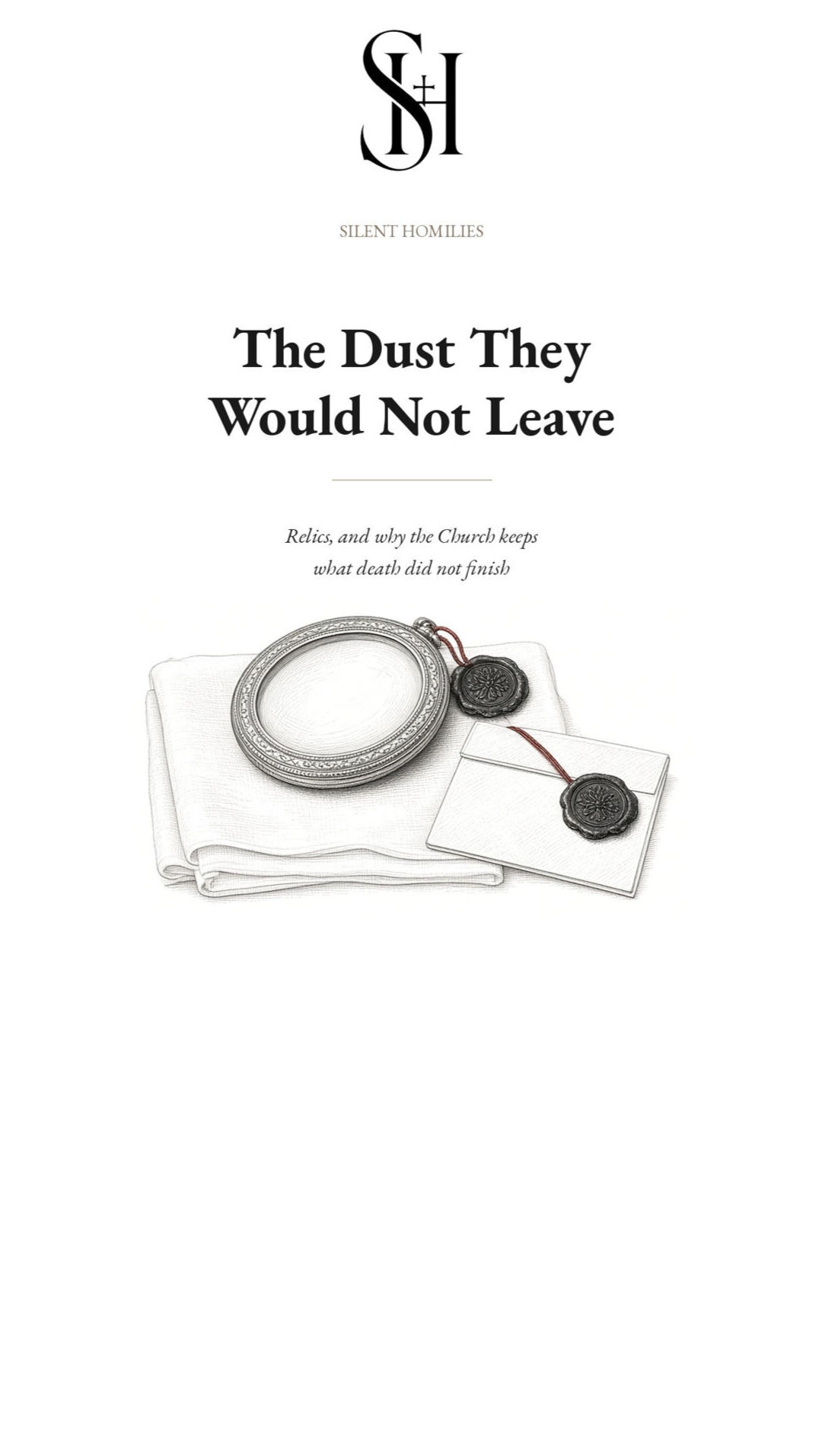
Read it if a side-chapel case has always made you shy. Read it if you have only ever heard relics used as a joke. The honour is meant to pass through the glass to a name. Sometimes that name lives in a small oval theca on a folded cloth, with a wax seal that looks, to a stranger, like nothing much at all.
A Silent Homilies booklet. Written to be read in one or two sittings.